Giving a Small Bookkeeping Team Its Week Back
- Client
- ClearLedger Bookkeeping
- Expertise
- AI & Business Automation / Web Development
- Timeline
- 8 weeks + 4 weeks monitoring

Where we started.
A three-person bookkeeping practice was receiving roughly 430 invoices, receipts, and bank documents each month from 38 recurring clients. Files arrived through email, shared folders, and phone photos, so one team member spent most Mondays renaming documents, chasing missing information, and copying figures into the accounting system. Month-end work regularly slipped into the following week, and the owner was reluctant to add clients because the team had no spare administrative capacity.
A focused response.
We focused on document intake rather than trying to automate the entire bookkeeping service. A single upload link and monitored inbox now collect client documents, extract a small set of agreed fields, flag duplicates, and create draft entries for review. Low-confidence items and unusual transactions stay with a bookkeeper. We piloted the workflow with six clients, compared every draft with the team's manual entry, and expanded it only after the exception rules were reliable.
What changed.
How it came together.
The Problem Was Intake, Not Bookkeeping
The team initially described the problem as being short-staffed. A two-week baseline showed something more specific: experienced bookkeepers were spending 31 hours a week organizing documents before they could begin client work. There was no consistent naming convention, the same receipt sometimes appeared in two channels, and missing details were usually discovered late in the month. We agreed that the first goal was not headcount reduction. It was to return administrative time to the existing team and make close dates more predictable.
A Narrow Workflow with Human Review
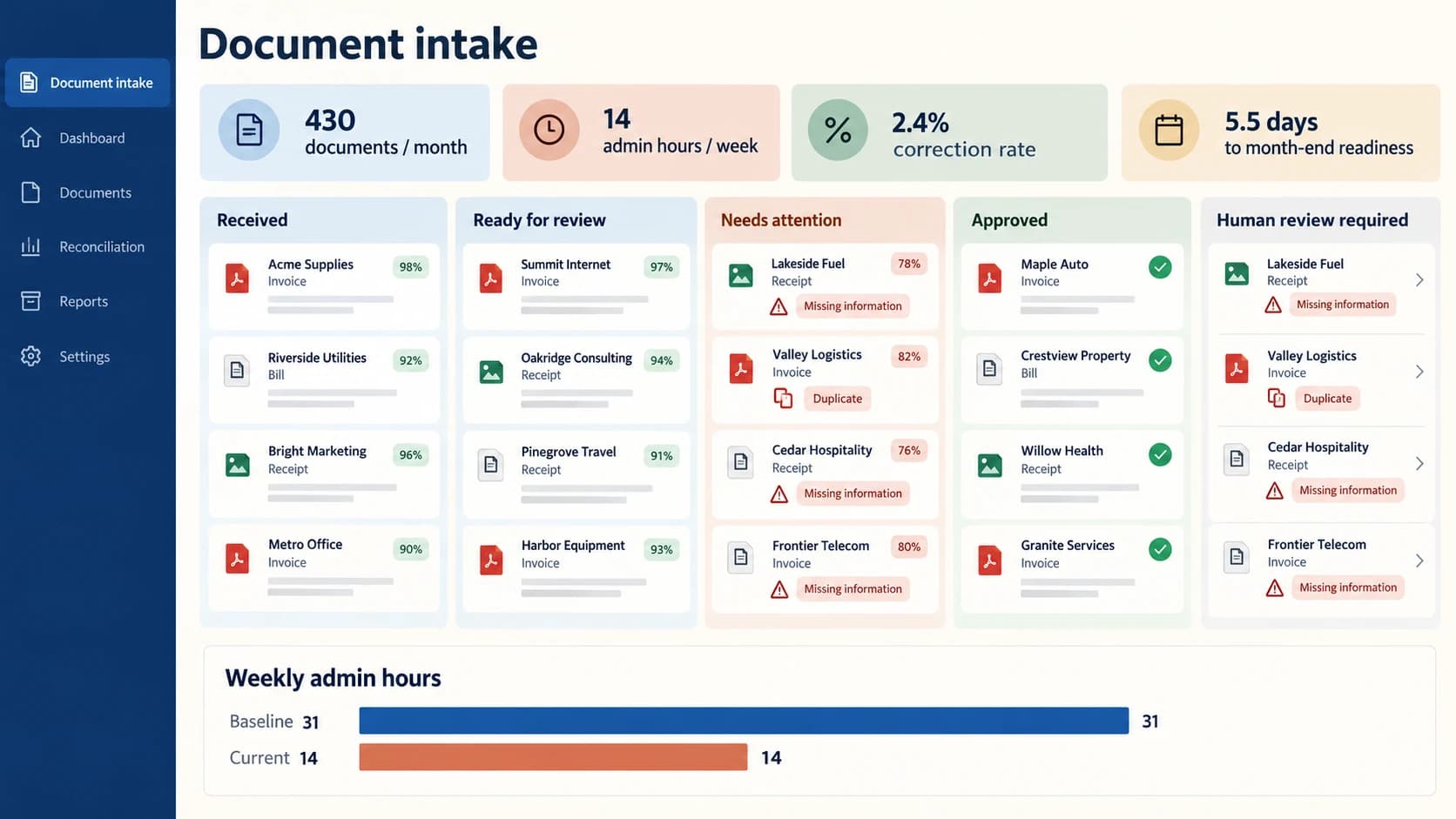
The new workflow accepts documents by upload or email, associates them with the correct client, checks for duplicates, and extracts vendor, date, reference number, tax, and total. It then creates a draft for a bookkeeper to approve. Confidence thresholds determine what can move forward and what needs attention; nothing posts automatically. We also added a simple queue showing missing documents and ageing exceptions, so the team can follow up before month-end rather than during it.
Measured After the Busy-Period Test
After four weeks of monitored use across all 38 clients, document administration averaged 14 hours a week. The proportion of entries returned for correction fell from 6.1% to 2.4%, largely because duplicate and incomplete files were caught earlier. Average month-end readiness improved by three business days. The practice chose to use the recovered capacity to onboard seven smaller clients over the next quarter while keeping the same team size; the project did not remove the need for professional review or client follow-up.
Ready to build your next chapter?
Let’s turn a thoughtful strategy into something that moves your business forward.