A Practical Social Media System That Can Lead to Enquiries
Connect useful local content to a clear profile, service page, enquiry route, and a small set of measurements that show what is working.
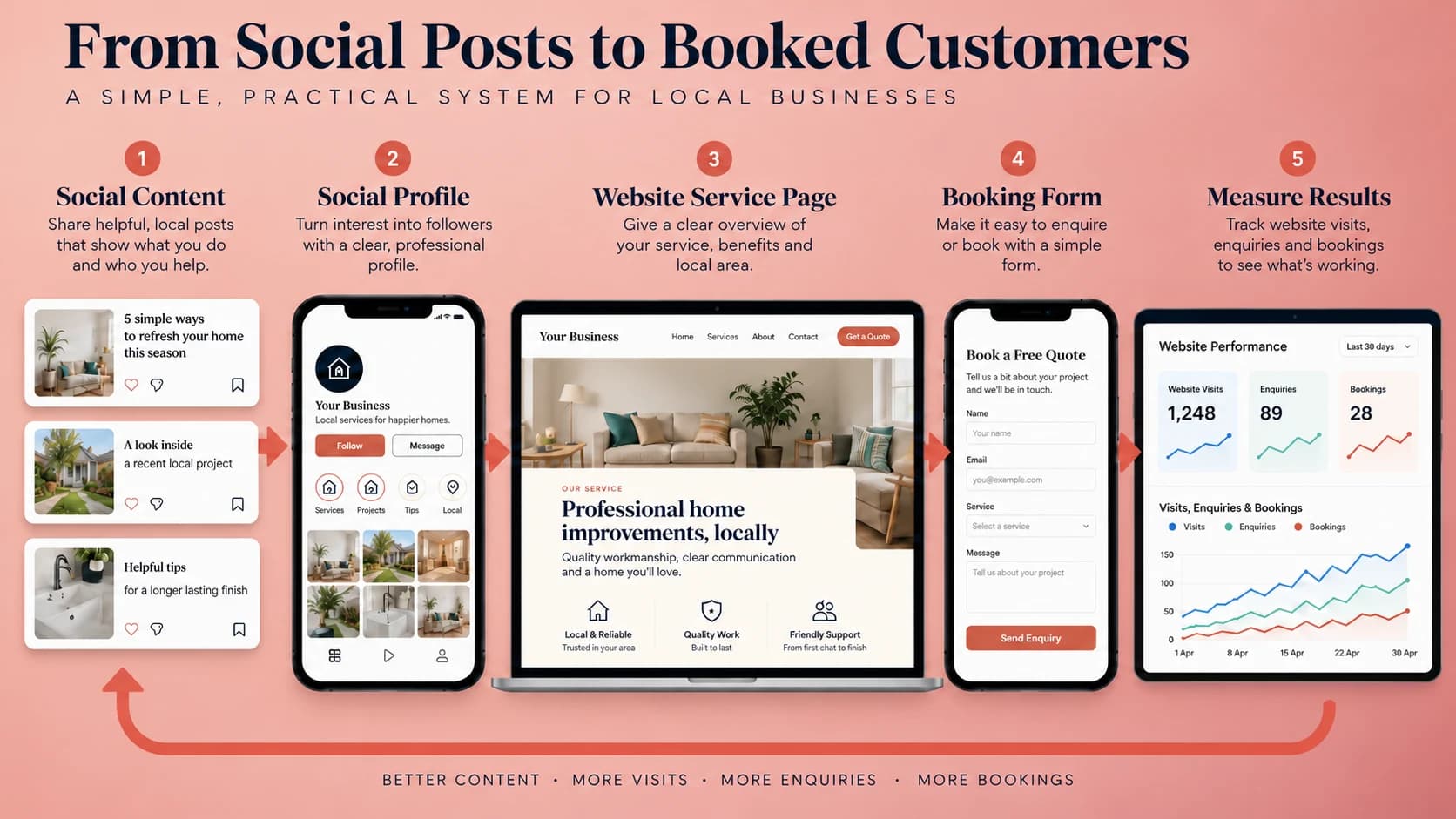
For a local business, social media does not need to produce a viral post to be useful. It needs to help the right people notice the business, understand what it offers, and take a sensible next step.
Likes and follower counts can show whether content is attracting attention, but they do not explain whether that attention is becoming website visits, enquiries, bookings, or shop visits. A practical strategy connects those stages instead of treating posting as the whole job.
Choose One Primary Business Action
Decide what you most want a suitable follower to do. For a trades business, it may be requesting a quote. For a clinic, it may be calling about an appointment. For a local retailer, it may be visiting the shop or ordering a product.
One primary action gives the account a clear direction. The profile description, link, pinned content, and calls to action should all make that next step easy to find. You can still share community news and useful advice without forcing a sales message into every post.
Make the Profile Do Its Job
Someone who discovers a post will often check the profile before visiting the website. In a few seconds, the profile should communicate:
- what the business does
- who or where it serves
- why somebody might choose it
- how to enquire, book, shop, or visit
Use a recognizable image, accurate contact details, and one dependable link. Remove old offers and broken booking links. If several links are necessary, label them clearly rather than sending people to a crowded list with no priority.
Build Content Around Customer Questions
Three or four repeatable content groups are usually enough. A local home-service company might use:
- practical maintenance advice
- examples of completed work with context
- explanations of the process and what customers should expect
- local availability, seasonal reminders, and team updates
Each group serves a different purpose. Advice earns attention, project examples provide evidence, process content reduces uncertainty, and availability posts make it easier to act.
Keep the examples specific. “Five signs a tap needs attention” is more useful than “We provide excellent plumbing.” A project post should explain the initial problem, what was done, and any limitation, rather than presenting an unexplained before-and-after image.
Use a Sustainable Publishing Rhythm
Choose a schedule the team can maintain during busy periods. Two useful posts a week can be more effective than daily filler followed by a month of silence.
A simple monthly plan can include:
- one frequently asked question each week
- one project or product example each week
- one customer-process explanation during the month
- timely updates when opening hours, stock, or availability changes
Capture photos and notes as work happens, with customer permission where required. A short capture checklist makes content production easier than trying to recreate the story weeks later.
Connect Content to the Next Step
Match the call to action to the post. An educational post might point to a full guide. A service example might link to the relevant service page. An availability update may invite a direct enquiry.
The destination must continue the same message. If a post discusses bathroom repairs, sending visitors to a generic homepage makes them search again. A clear service page with coverage details, evidence, and a short form creates a much more coherent journey.
Track a Small, Useful Funnel
Add campaign tags to website links where practical and make sure forms and calls can be attributed without collecting more personal data than needed. Review:
- profile visits from relevant posts
- clicks to the website or booking page
- enquiries attributed to social traffic
- qualified enquiries and bookings
- saves, replies, and engagement as supporting signals
Ask new customers how they heard about the business. Attribution will never be perfect: someone may see a post, search for the company later, and then call. Use the numbers as directional evidence, not as a claim that every booking has a single source.
An Illustrative Local Example
Imagine a decorating company publishes eight posts in a month. Three practical advice posts receive most of the saves, while two project explanations generate most of the service-page visits. The availability posts receive less engagement but lead to several direct messages.
The useful conclusion is not simply to chase the highest-engagement format. It is to keep the advice that earns attention, improve the project posts that move people to the website, and make the enquiry process clearer for people who are ready to act.
Review and Adjust Monthly
At the end of each month, identify which subjects attracted suitable local attention, which posts led to a next step, and which questions keep appearing in messages or calls. Use those findings to plan the next month.
Social media is most manageable when it becomes a small operating system rather than a daily performance: answer real questions, show credible evidence, make the next step clear, and measure whether the journey is producing useful conversations for the business.
Altus Media Labs